Broadcast-Linked Reward Eligibility: Regulatory Details That Matter
Morgan Perry · Aug 25, 2026

Broadcast-Linked Reward Eligibility: Regulatory Details That Matter
Eligibility in broadcast-linked reward programs depends on layers of federal, state, and international rules that govern how participants qualify for prizes tied to television or radio transmissions, and observers note these frameworks determine everything from geographic reach to employment status restrictions while data from regulatory filings shows patterns across multiple markets.
Researchers have tracked how agencies like the Federal Communications Commission enforce broadcast-specific conditions that affect who can enter contests advertised during programming, whereas the Australian Communications and Media Authority applies separate standards for similar promotions in its jurisdiction, and these differences create distinct qualification thresholds that programs must satisfy before launch.
Geographic and Residency Constraints
Many broadcast reward initiatives limit participation to viewers within signal coverage areas because regulations require clear delineation of eligible regions to avoid cross-border compliance issues, and this practice stems from rules that tie entry validity to reception of the originating broadcast signal while excluding residents outside designated zones.
Studies from industry reports indicate that residency verification often involves zip code checks or IP address validation when entries occur online, yet programs linked to over-the-air signals must still respect traditional broadcast footprints, and one case in Canada highlighted how the Canadian Radio-television and Telecommunications Commission required adjustments when digital streaming extended access beyond licensed territories.
Age, Employment, and Affiliation Rules
Age thresholds appear consistently across jurisdictions because statutes mandate that minors cannot enter certain promotions without guardian consent, and broadcast-linked programs frequently set minimum ages at 18 or 21 depending on prize type while employment exclusions bar station employees, their immediate family members, and advertising partners from participation to prevent conflicts of interest.
According to Federal Trade Commission guidance on advertising practices, these restrictions help maintain fairness in contests promoted through commercial airtime, and similar provisions appear in European Union directives that address media services across member states, where updates scheduled for August 2026 aim to harmonize digital entry methods with traditional broadcast rules.
Entry Method Limitations and No-Purchase Requirements
Regulations often demand alternate entry methods that do not require purchase or viewing commitments, which means broadcast programs must offer mail-in or online options alongside any phone or app-based entries tied to watching specific shows, and this structure ensures compliance with laws that treat sweepstakes as skill or chance games rather than sales incentives.
Figures from regulatory submissions reveal that failure to provide free entry paths has led to enforcement actions in multiple states, while programs that integrate social media hashtags or text responses must still maintain separate non-broadcast channels, and observers note these requirements become more complex when live events or real-time voting features connect directly to televised segments.
Disclosure and Record-Keeping Obligations
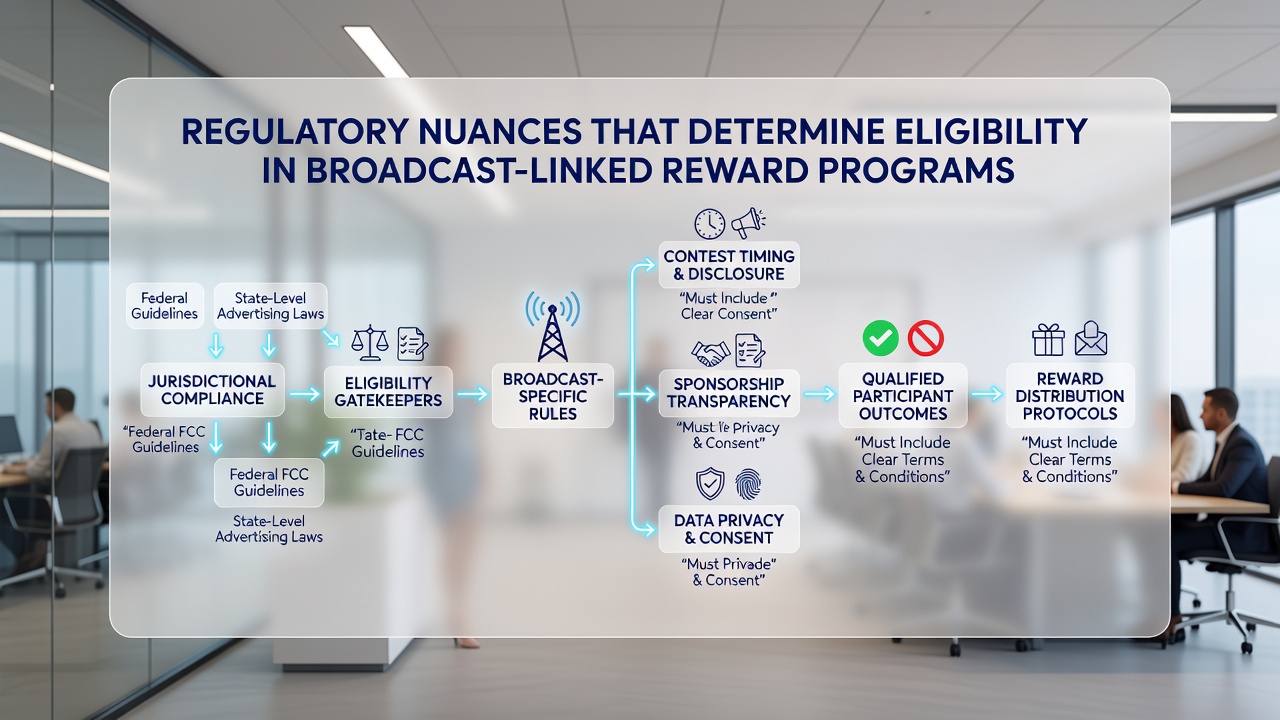
Broadcast reward programs face mandatory disclosure standards that spell out eligibility criteria in both on-air announcements and official rules, and agencies require these details to appear clearly so potential participants understand restrictions before attempting entry, whereas incomplete disclosures have triggered investigations by bodies focused on consumer protection.
Data collected through public records shows that record-keeping for winner selection and prize distribution must cover at least three years in many U.S. jurisdictions, and international programs often adopt similar retention periods to satisfy overlapping rules when broadcasts reach audiences across borders, yet the precise formats for documentation vary by region.
Conclusion
Regulatory nuances in broadcast-linked reward programs continue to evolve as digital distribution intersects with traditional airwaves, and compliance demands attention to geographic limits, demographic filters, entry alternatives, and disclosure mandates that differ by jurisdiction. Those who administer such programs reference sources including the Federal Communications Commission and the Australian Communications and Media Authority to align operations with current standards, while upcoming adjustments in 2026 signal further refinements ahead.