Cash Sweepstakes Entry Forms Highlight Diverse Promotional Strategies in Modern Contests
Rafael Wolf · Jun 14, 2026
Cash Sweepstakes Entry Forms Highlight Diverse Promotional Strategies in Modern Contests
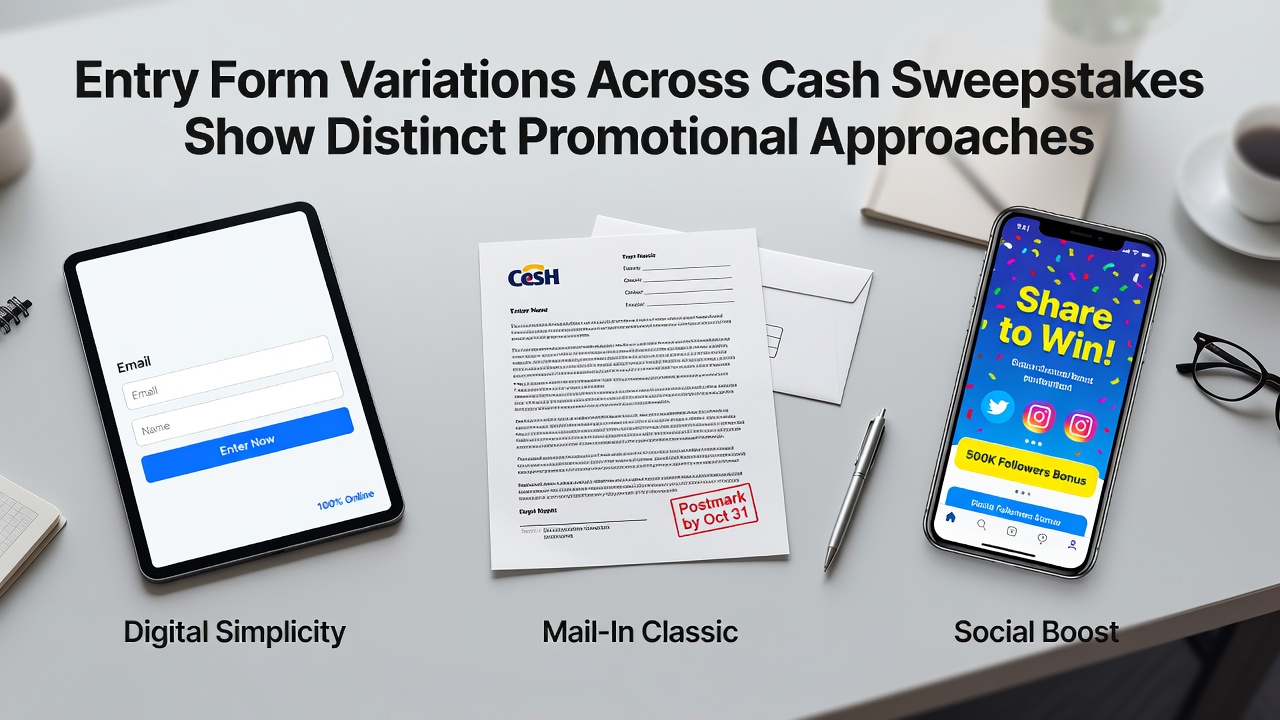
Entry forms in cash sweepstakes function as primary contact points between sponsors and participants, yet their structures differ substantially based on campaign goals. Some contests employ brief single-field submissions while others integrate extended questionnaires that gather demographic details alongside entry data. These differences arise because companies tailor forms to match specific marketing objectives such as rapid brand exposure or deeper audience segmentation. Observers note that shorter forms often prioritize volume whereas detailed versions focus on qualified leads. Digital platforms have accelerated this variation since many sponsors now combine web-based entries with mobile-optimized versions. A typical online cash sweepstakes might require only an email address and zip code at first, then expand into optional fields for preferences or interests. In contrast, certain retail promotions collect purchase receipts through upload portals that verify eligibility before advancing participants. Such mechanics demonstrate how entry design directly supports the underlying promotional intent.Single-Step Forms Versus Layered Submission Processes
Single-step entry forms streamline participation by limiting required fields to essential contact information, which suits campaigns seeking maximum reach within short timeframes. Sponsors using this approach frequently pair the form with prominent prize displays to encourage immediate action. Layered processes, however, unfold across multiple screens where initial entries lead into secondary questions about lifestyle habits or product usage. Data from industry reports indicates these multi-phase designs help brands build richer participant profiles for future targeting.
Promotional teams select one method over the other depending on whether their priority lies in quick engagement spikes or sustained relationship building. June 2026 saw several major brands shift toward hybrid models that begin with minimal fields before unlocking bonus entries through optional surveys. This evolution reflects ongoing experimentation with balance between accessibility and information depth.
Integration of Social Media and Third-Party Logins
Many cash sweepstakes now embed social login options within entry forms, allowing participants to connect accounts from platforms such as Facebook or Instagram rather than creating new profiles. This technique reduces friction while simultaneously expanding the sponsor's visibility across networks when entries auto-share. Research from academic studies on digital marketing patterns shows that social integration correlates with higher referral rates compared to traditional standalone forms.
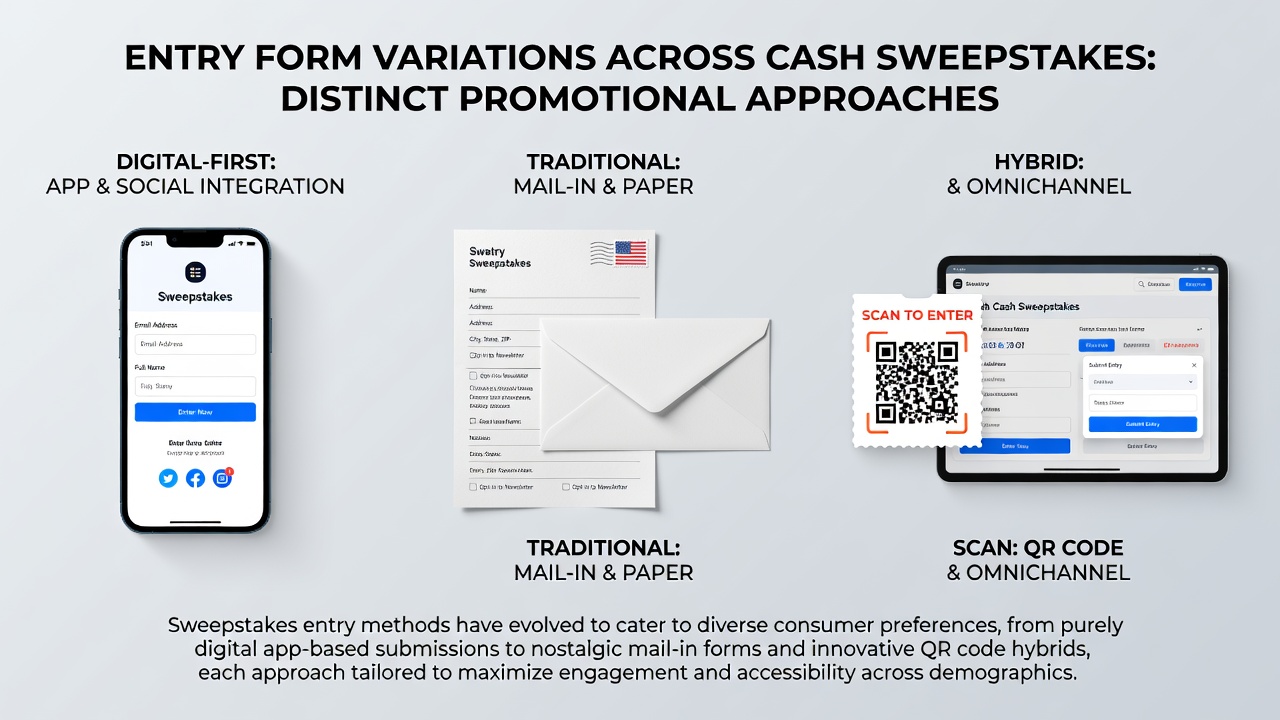
Other variations incorporate third-party authentication services that pull verified data without requiring manual input. Those who've examined entry trends across regions observe that European sponsors often emphasize privacy-compliant integrations following stricter data regulations, whereas North American campaigns lean more toward seamless login flows. The choice of integration method thus reveals underlying priorities around data handling and audience expansion.
Verification Mechanisms and Their Promotional Implications
Receipt uploads or purchase code validations appear in forms tied to product promotions, where sponsors aim to drive actual sales rather than pure awareness. These mechanisms require participants to submit proof of transaction before completing entry, creating a direct link between contest participation and consumer behavior. According to findings from consumer protection agencies in Canada, such verification steps help maintain compliance while also generating valuable purchase data.
Mail-in forms persist alongside digital options in certain markets, often targeting demographics less inclined toward online submissions. Sponsors maintain these parallel channels because they recognize that distinct entry methods reach different segments effectively. The coexistence of paper and electronic formats underscores how promotional strategies adapt to audience diversity rather than pursuing uniform approaches.
Regulatory Influences on Form Design Across Jurisdictions
Legal requirements shape entry form content in measurable ways, with sponsors incorporating mandatory disclosures about odds, eligibility, and prize details directly into submission interfaces. Forms must display these elements clearly to satisfy oversight from bodies such as the Federal Trade Commission in the United States or the Australian Competition and Consumer Commission. Compliance considerations therefore influence layout decisions, including placement of text blocks and consent checkboxes.
Variations become especially evident when comparing cash sweepstakes operating in multiple countries simultaneously. One study revealed that Australian campaigns frequently include additional age-verification prompts compared to domestic U.S. versions due to differing age restrictions. These adaptations illustrate how regulatory landscapes drive distinct promotional executions even when the core prize structure remains similar.
Emerging Patterns Observed in Mid-2026 Campaigns
Analysis of contests active during June 2026 highlighted increased use of progressive profiling within entry flows, where returning participants encounter pre-filled fields based on prior interactions. This technique reduces repetition while allowing sponsors to refine messaging over successive entries. Industry organizations tracking sweepstakes activity report that such personalization elements now appear in roughly one-third of major cash promotions.
Another notable shift involves conditional entry bonuses tied to specific actions completed within the form itself, such as watching a short video or following a brand account. These features extend the promotional reach beyond initial submission and create layered engagement opportunities. Observers note that the resulting data helps sponsors measure which form elements most effectively convert casual entrants into repeat participants.
Conclusion
Entry form variations across cash sweepstakes continue to mirror the distinct promotional approaches adopted by sponsors worldwide. From minimal single-field designs to multi-layered processes incorporating social logins and verification steps, each configuration serves targeted marketing functions. Regulatory frameworks further differentiate these implementations across regions while emerging patterns in 2026 demonstrate ongoing refinement. Those monitoring the space can expect further evolution as brands balance participant convenience against data collection objectives through increasingly sophisticated form architectures.