Clause Variations Reshaping Entry Rates in Private Member Prize Competitions
Casey Jung · Jul 30, 2026
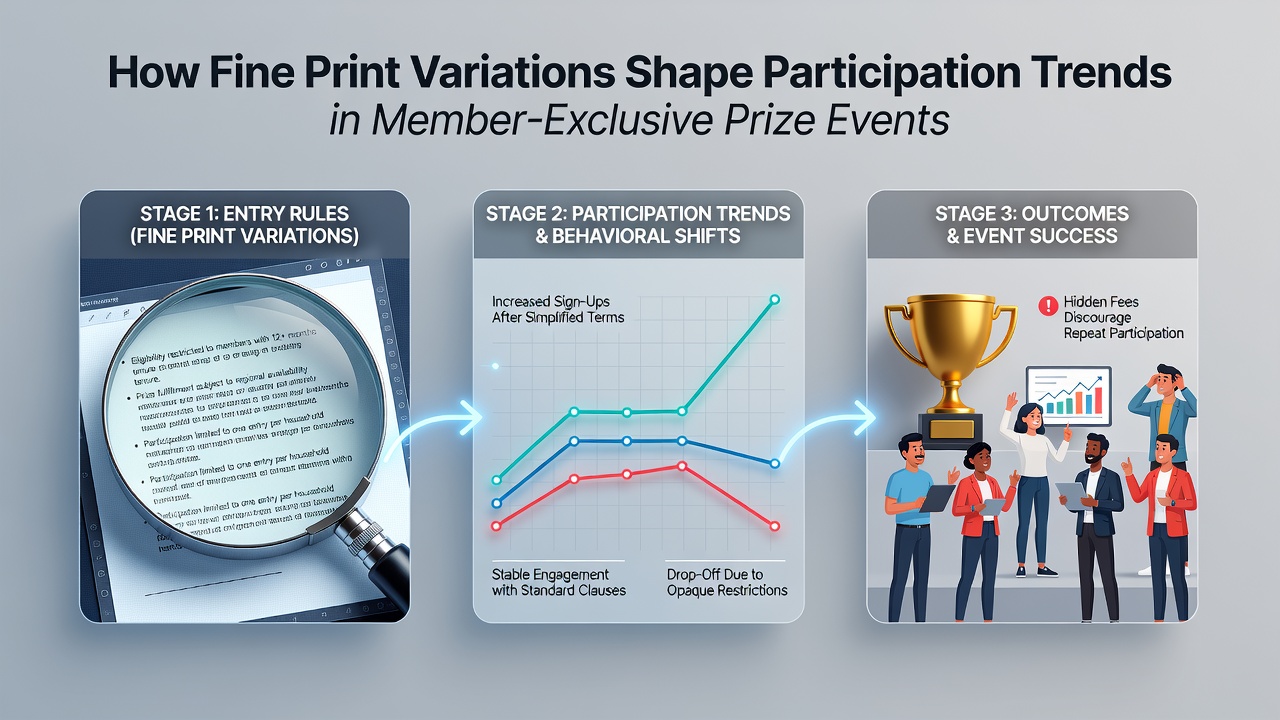
Clause Variations Reshaping Entry Rates in Private Member Prize Competitions
Member-exclusive prize events rely on detailed eligibility clauses that differ across platforms, and these distinctions produce measurable shifts in who submits entries and how often. Observers note that small changes in age thresholds, residency requirements, and renewal obligations create distinct participation curves rather than uniform engagement across all contests.
Age and Renewal Clauses Drive Demographic Splits
Age restrictions written into fine print often determine whether younger adults or established members dominate entry lists, and data collected through July 2026 shows that contests requiring participants to be at least twenty-one attract noticeably fewer college-age entrants than those open from eighteen onward. Renewal clauses add another layer because members who must re-verify status every quarter drop out at higher rates than those facing annual checks only, according to figures released by the Federal Trade Commission. Researchers tracking multiple platforms found that automatic renewal language paired with simple email confirmation keeps participation steadier than manual re-application processes that demand additional documentation.
Geographic Limits Narrow the Entrant Pool
Residency rules stated in the fine print restrict entries to specific states or provinces, and this narrowing effect appears strongest when contests limit participation to a single country rather than allowing entries from several nations. One analysis of North American events revealed that U.S.-only clauses reduce Canadian member entries by more than half compared with events that accept addresses across both countries, while similar patterns emerge in European programs governed by varying national consumer rules. The Australian Competition and Consumer Commission has documented parallel outcomes in regional giveaways where state-specific language shrinks the overall pool yet concentrates activity among those who already meet the criteria.
Entry Frequency Caps and Their Effect on Repeat Behavior
Daily or weekly entry limits written into the rules influence how often members return, and studies from university research groups indicate that single-entry-per-day formats sustain longer-term involvement than unlimited daily entries that encourage short bursts of activity followed by quick drop-off. When fine print permits multiple entries through separate accounts, some platforms record inflated numbers that later decline once duplicate detection systems activate, whereas strict one-account rules correlate with steadier, lower-volume participation over several months. Observers tracking July 2026 trends noted that members respond to frequency caps by spacing their submissions more evenly rather than clustering attempts near deadlines.
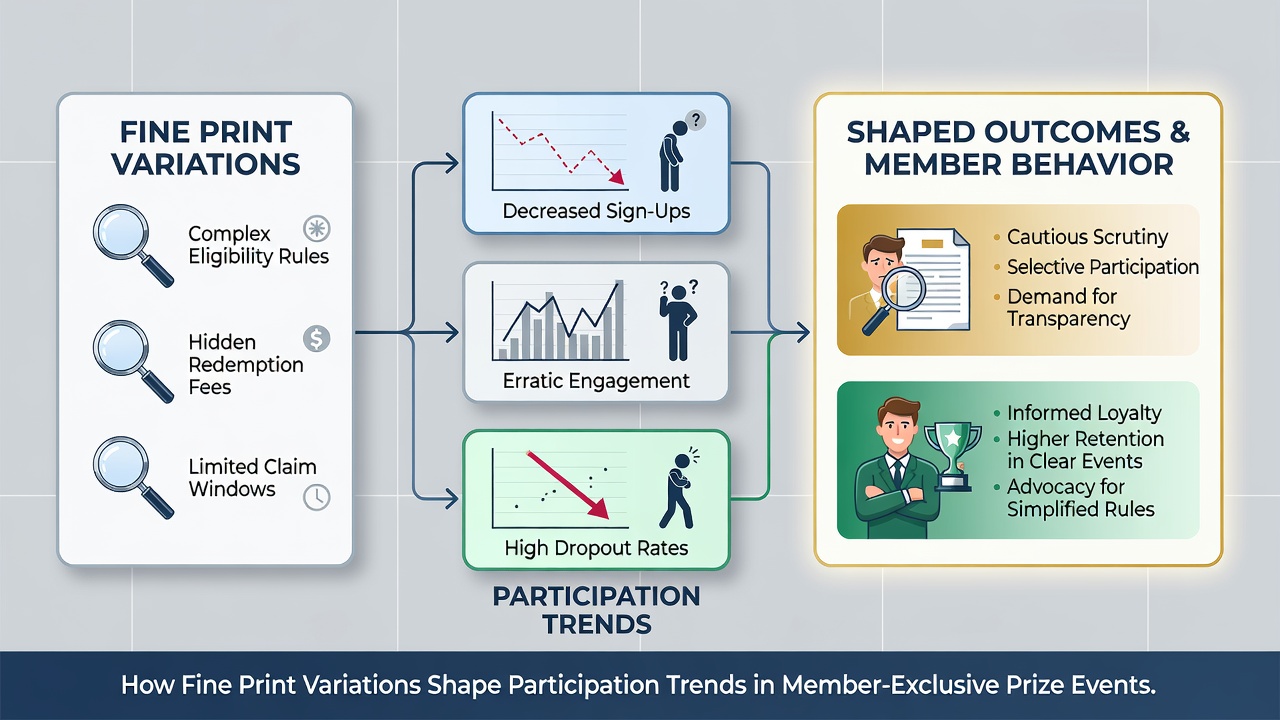
Membership Duration Requirements Alter Newcomer Ratios
Some events require a minimum membership period before entry becomes available, and these waiting periods shift the balance between long-term subscribers and recent joiners. Data indicates that a ninety-day waiting clause reduces new-member participation by roughly forty percent compared with contests that allow entry immediately upon signup, while shorter thirty-day requirements produce milder effects. Industry reports compiled by research institutions show that members who clear the waiting period tend to maintain higher entry consistency afterward because the barrier itself filters for those already committed to staying active.
Combined Clauses Create Layered Participation Patterns
When age, geography, and frequency rules appear together in a single rulebook, the combined restrictions produce participation profiles that differ sharply from events using only one type of limit, and analysts have recorded these interactions across dozens of platforms. Members who satisfy multiple conditions often represent a smaller yet more predictable group, while those excluded by any single clause rarely attempt workarounds once they read the fine print. Platforms that publish clear summaries of combined requirements alongside the full legal text see fewer invalid entries and higher completion rates among qualified members.
Conclusion
Fine print variations in member-exclusive prize events continue to shape entry trends through measurable differences in eligibility language, and organizations monitoring these patterns report that adjustments to individual clauses reliably alter who participates and at what volume. Data gathered through mid-2026 confirms that platforms adjusting age thresholds, residency wording, or renewal steps observe corresponding changes in demographic makeup and submission frequency without needing to alter prize values or promotion methods. Those who study these dynamics note that precise rule wording remains one of the most direct levers available for guiding participation outcomes in restricted contests.