Cookie Policies Shape Participation Patterns in Member-Only Prize Draw Platforms
Rafael Wolf · Aug 11, 2026

Cookie Policies Shape Participation Patterns in Member-Only Prize Draw Platforms
Member-exclusive draw systems rely on cookies to manage user sessions, track entry histories, and deliver personalized prize notifications across multiple contests. These small text files stored in browsers record login status, preferred entry categories, and frequency of visits to closed platforms where only registered participants can submit entries for cash awards, electronics, and apparel. Platforms operating such systems collect this data to verify eligibility and prevent duplicate submissions while complying with data retention rules that vary by jurisdiction.
How Cookies Function Within Restricted Draw Environments
Essential cookies maintain active sessions so members avoid repeated logins during daily entries, whereas analytics cookies measure time spent on contest pages and click rates on specific prize categories. Functional cookies remember filter preferences such as geographic restrictions or prize value thresholds, allowing returning users to navigate results more efficiently. Research conducted by academic teams at Canadian universities shows that platforms using persistent cookies for session continuity report higher rates of repeat daily logins compared with sites that clear identifiers after each visit.
Regulatory Requirements Across Regions
The European Data Protection Board guidelines require explicit consent before non-essential cookies activate on sites serving EU residents, a standard that has prompted many draw platforms to implement layered consent banners since the enforcement updates of 2024. In the United States, the Federal Trade Commission has examined how sweepstakes operators disclose cookie usage in privacy statements, with particular attention to California residents protected under the CCPA. Australian regulators through the Office of the Australian Information Commissioner have similarly required clear notices about data collection practices on contest sites that attract participants from that region.
Observers note that platforms must now distinguish between cookies necessary for security verification and those used for behavioral analysis that could influence which members receive targeted reminders about upcoming draws. Failure to obtain granular consent has led some operators to limit cookie deployment, resulting in reduced visibility into engagement metrics that previously informed prize selection strategies.
Measured Effects on Member Activity Levels
Figures from industry reports released in August 2026 indicate that platforms adopting strict cookie consent flows experienced a measurable dip in new member registrations during the first quarter after implementation, followed by stabilization as users became accustomed to the prompts. Those who accepted analytics cookies showed longer average session durations and higher completion rates for multi-step entry forms that require profile updates. Conversely, members who opted out of non-essential tracking demonstrated lower return visit frequency, suggesting that the absence of personalized recommendations reduced overall platform stickiness.
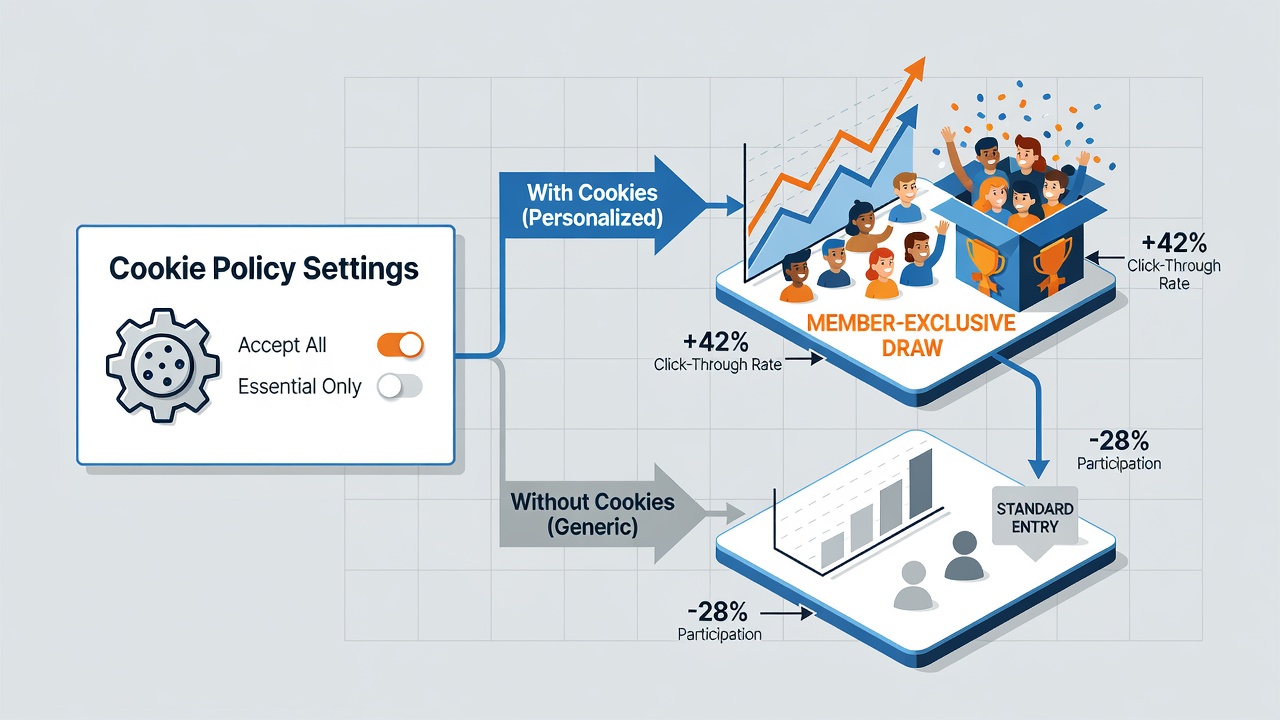
One study released by a European research consortium tracked participation across several closed draw sites and found that clear explanations of cookie purposes correlated with higher acceptance rates, particularly when banners listed specific benefits such as faster loading of entry histories and alerts for time-sensitive contests. Sites that buried consent options behind multiple clicks recorded greater opt-out percentages, which in turn limited operators' ability to analyze drop-off points in the entry process.
Adjustments Made by Platform Operators
Operators have responded by redesigning consent interfaces to present choices in plain language, listing exactly which data points support features like winner notifications or duplicate prevention. Some platforms now offer a "reject all" option alongside granular toggles, satisfying both regulatory expectations and user preferences documented in surveys conducted by trade associations representing online contest organizers. Data indicates that transparent approaches have helped maintain steady engagement levels even as privacy standards tighten globally.
Conclusion
Member-exclusive draw systems continue to adapt cookie frameworks in response to evolving privacy standards, with participation patterns reflecting how clearly platforms communicate the purpose of each tracking technology. Regulatory bodies across multiple continents have established baseline requirements that shape technical choices, while engagement data from 2026 illustrates the direct connection between consent mechanisms and member return rates. Platforms that balance compliance with functional transparency maintain higher activity levels among registered participants seeking access to restricted prize opportunities.