Entry Validation Mechanisms in Multi-Platform Promotional Draws
Casey Jung · Aug 4, 2026
Entry Validation Mechanisms in Multi-Platform Promotional Draws
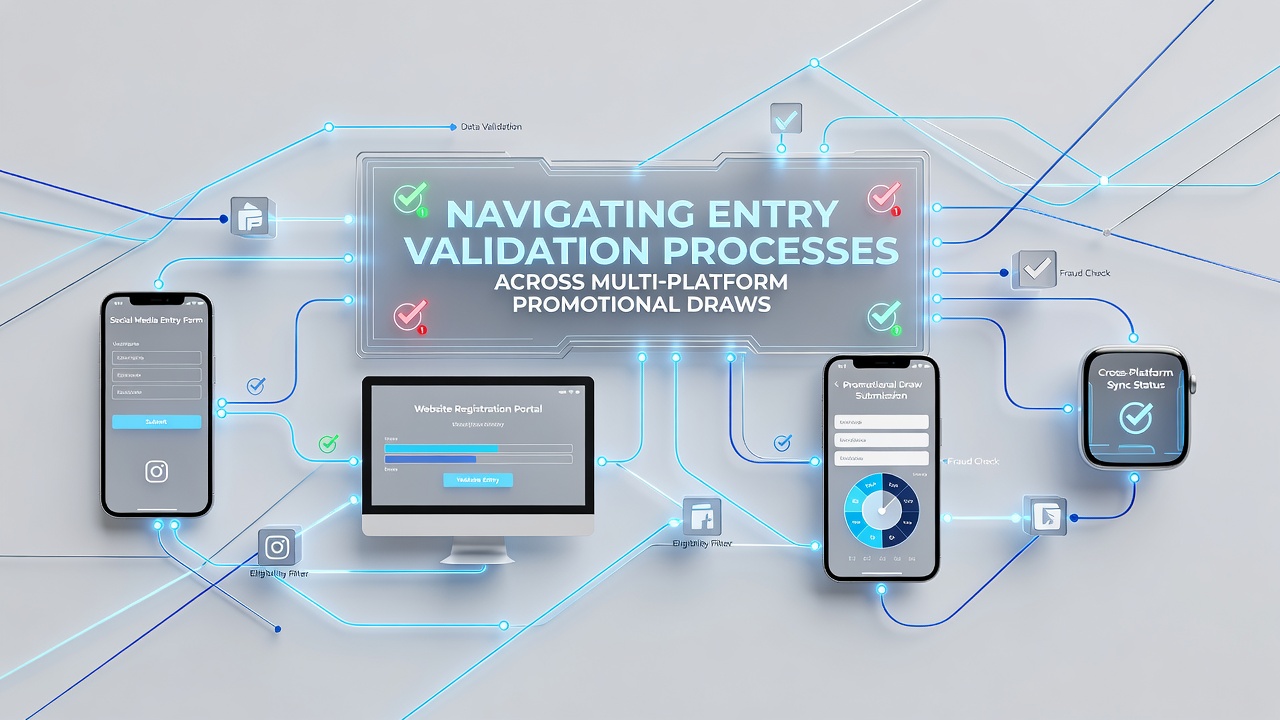
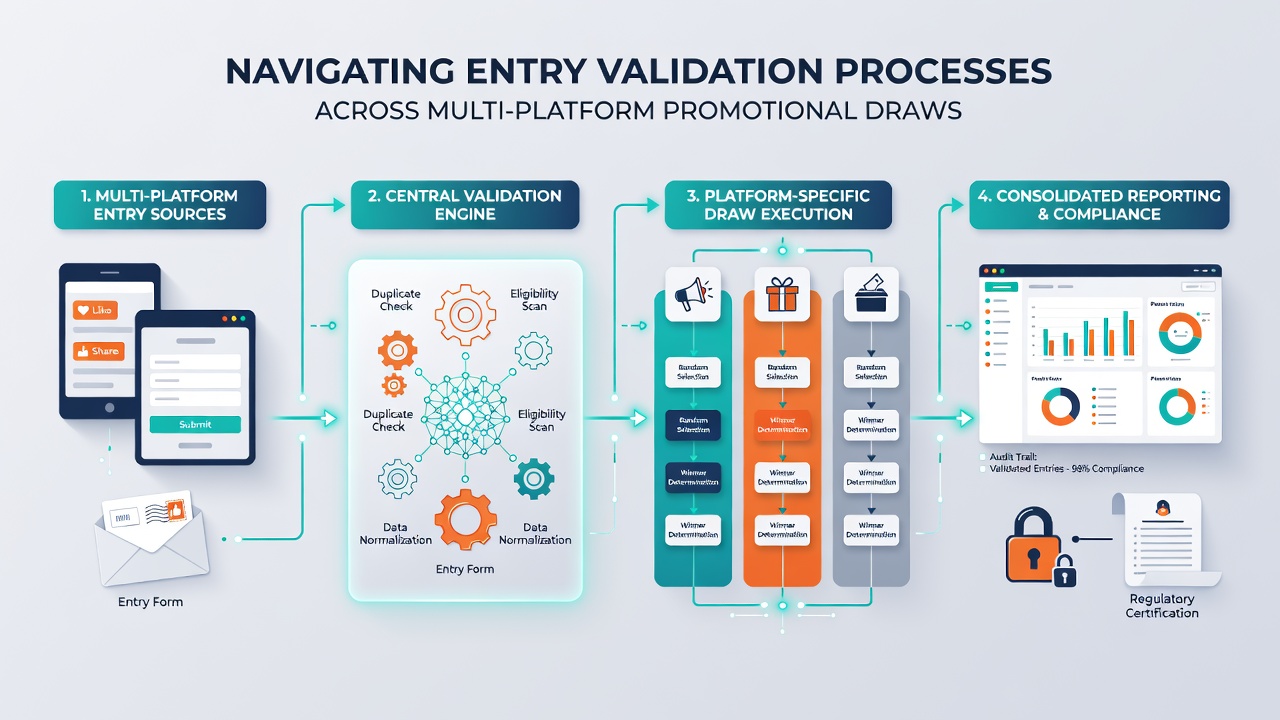
Entry validation in multi-platform promotional draws requires coordinated checks that confirm participant eligibility while preventing duplicate submissions, and these processes have grown more intricate as contests span websites, social networks, email campaigns, and mobile applications simultaneously. Organizers deploy automated systems that cross-reference data points such as IP addresses, device identifiers, and account credentials to maintain fairness across every channel involved.
Core Validation Steps on Individual Platforms
Website-based entries typically begin with form submissions that trigger immediate email confirmations, CAPTCHA challenges, and sometimes two-factor authentication linked to a mobile number, while social media platforms add layers such as account age verification and activity history scans to filter out newly created profiles created solely for contest participation. Mobile app entries often incorporate device fingerprinting combined with geolocation data to ensure compliance with regional eligibility rules, and each method feeds into a central database that flags inconsistencies in real time.
Cross-Platform Data Synchronization Challenges
When a single promotion accepts entries through multiple channels, validation engines must reconcile records without creating false positives that disqualify legitimate participants, and this synchronization relies on unique identifiers such as hashed email addresses or account linkage tokens that persist across systems. Research from consumer protection agencies indicates that mismatched data formats between platforms account for a significant portion of entry rejections each year, prompting developers to adopt standardized APIs that streamline information exchange while preserving privacy controls.
Observers note that August 2026 will bring revised digital identity guidelines in several jurisdictions, requiring promoters to implement enhanced consent tracking for cross-border data flows during validation, and these changes aim to align contest operations with broader data protection frameworks already in place for commercial transactions.
Handling Duplicate and Fraudulent Submissions
Automated detection routines scan for patterns such as repeated IP usage within short time windows or identical device signatures appearing under different user names, and when flags arise the system routes those entries to manual review queues staffed by compliance teams. Industry reports show that coordinated fraud rings frequently target high-value draws by distributing entries across dozens of accounts, making layered validation essential for preserving prize integrity and participant trust.
Regulatory Influences on Validation Protocols
Government agencies including the Federal Trade Commission publish guidelines that specify disclosure requirements for entry limits and eligibility criteria, while the Australian Competition and Consumer Commission enforces similar transparency rules that affect how validation messages appear to users during the submission process. European data protection authorities have issued opinions on the lawful basis for processing personal data in promotional contexts, encouraging the use of anonymized tokens where full identity verification proves unnecessary for determining winners.
Technical Tools Supporting Validation Workflows
Many organizers integrate third-party services that provide real-time phone number verification and email deliverability checks, and these tools reduce bounce rates while simultaneously blocking disposable addresses commonly associated with bulk entries. Database queries that compare new submissions against historical winner lists further prevent repeat claims, and machine learning models trained on past contest data help surface anomalies that rule-based systems might overlook.
Participant Experience During Validation
Clear instructions at each stage minimize drop-off rates, and prompts that explain why certain information is required tend to increase completion percentages according to usability studies conducted by academic researchers. When validation fails, automated emails that detail the specific issue and provide correction steps allow participants to resolve problems without restarting the entire entry process, and this approach maintains engagement across the multiple touchpoints involved in a single promotion.
Conclusion
Entry validation across multi-platform promotional draws continues to evolve through tighter integration of verification technologies and regulatory expectations, and successful implementations balance security needs with user convenience by leveraging consistent identifiers and transparent communication at every step. Data from oversight bodies demonstrates that refined processes correlate with higher compliance rates and fewer disputes over winner selection, underscoring the operational importance of these mechanisms in contemporary contest administration.