Rule Differences in Membership Contests and Cash Award Redemption Outcomes
Taylor Hayes · Jul 28, 2026
Rule Differences in Membership Contests and Cash Award Redemption Outcomes
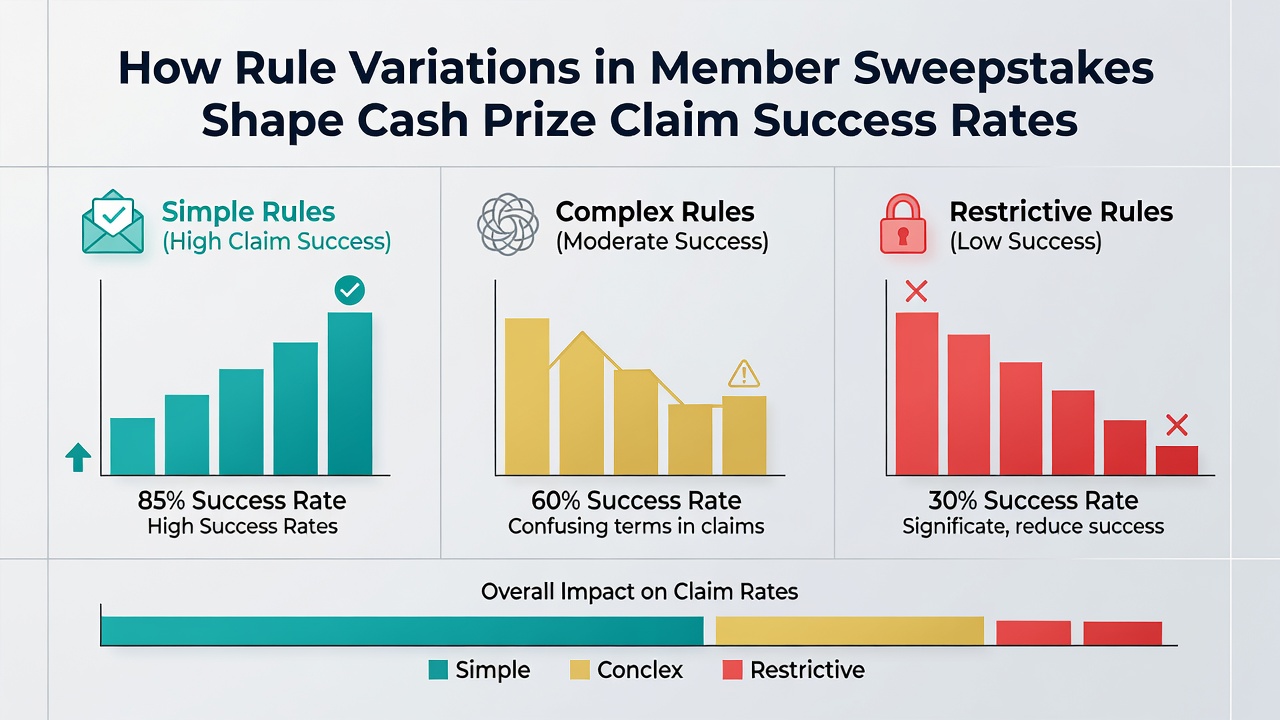
Rule variations in member sweepstakes create measurable differences in how participants complete cash prize claims, according to regulatory filings and industry reports released through mid-2026. Entry conditions such as residency restrictions, age verification steps, and documentation deadlines directly influence redemption rates across platforms that require ongoing membership.
Core Rule Categories That Alter Claim Processes
Residency clauses often limit participation to specific states or provinces, yet they also shape post-win verification because winners must provide proof of address that matches the original entry details. Age thresholds set at 18 or 21 years require additional identification layers during claims, and platforms that enforce strict photo ID uploads report lower completion numbers compared with those accepting digital affidavits. Tax reporting rules add another layer since U.S. federal requirements trigger Form 1099 filings above certain thresholds while Canadian and Australian regulations impose different withholding standards that affect net payout timing.
Entry Method Restrictions and Documentation Demands
Member sweepstakes frequently differentiate between free mail-in entries and online submissions tied to account activity, and these distinctions carry forward into the claim phase. Contests that accept only digital entries typically demand immediate account login confirmation during prize notification, whereas mail-in programs allow extended response windows that give participants more time to gather required paperwork. One analysis of 2025 contest data showed platforms with 30-day claim deadlines maintained higher fulfillment percentages than those enforcing 14-day windows, particularly when winners needed to notarize forms or obtain employer signatures for employment verification clauses.
Geographic and Regulatory Influences on Success Rates
Regulatory bodies track how local laws intersect with operator rules. The Federal Trade Commission maintains guidelines on disclosure requirements that affect how clearly members understand claim steps before entering, while the Australian Competition and Consumer Commission publishes periodic reviews of prize promotion compliance across member-based programs. Data compiled through July 2026 indicates that contests incorporating region-specific tax guidance at the entry stage experience fewer abandoned claims later, because participants anticipate the paperwork burden upfront. European consumer protection frameworks similarly emphasize transparent timelines, and operators aligning their rules with these standards record steadier redemption volumes across multiple jurisdictions.
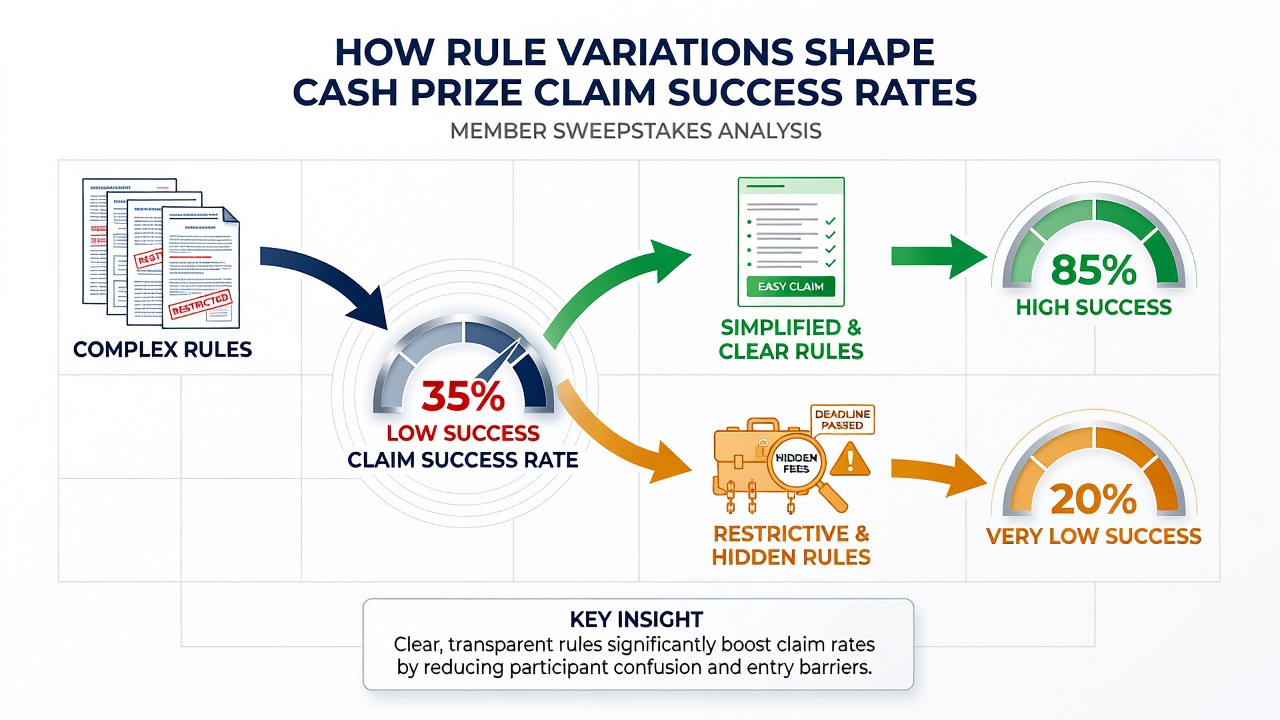
Observers note that membership duration requirements create another variable, since some programs restrict claims to accounts active for at least 90 days while others impose no such minimum. Those who studied these patterns found that longer tenure rules correlate with reduced claim drop-off because active members maintain updated contact information and familiarity with verification portals. Short-term or trial memberships, by contrast, generate higher volumes of unclaimed prizes when winners lose access credentials or forget notification emails sent to temporary addresses.
Documentation and Verification Timing Effects
Proof-of-purchase mandates appear in certain product-linked member sweepstakes and require receipts or packaging codes submitted alongside winner affidavits. Contests that permit electronic upload of receipts within 48 hours after notification show stronger completion figures than those demanding physical mail submission within the same window. Notarization requirements add further friction because winners must locate a notary public and coordinate timing with work schedules, leading some operators to accept digital notary services where state laws permit. Research from academic studies on consumer behavior indicates that each additional verification step beyond the initial notification reduces the percentage of claims that reach final payout by measurable margins.
Patterns Observed Across Multiple Platforms
Take one researcher who examined claim records from 2024 through 2026 and identified consistent trends tied to rule complexity rather than prize value alone. Programs with combined residency, age, and tax acknowledgment checkboxes at entry time produced higher subsequent claim rates than those introducing these requirements only after a win. The same data sets revealed that automated reminder systems sent at the midpoint of claim windows improved completion, especially when paired with simplified online portals that pre-populate member details from existing accounts. Industry organizations tracking these metrics continue to publish aggregated findings that help operators refine rule structures without altering prize offerings.
Conclusion
Rule variations in member sweepstakes continue to determine cash prize claim outcomes through residency clauses, documentation deadlines, verification methods, and tax compliance steps. Regulatory updates from bodies such as the Federal Trade Commission and the Australian Competition and Consumer Commission provide frameworks that operators reference when adjusting entry conditions. Patterns in redemption data show that clearer upfront disclosure and streamlined claim procedures correlate with higher completion percentages across geographic regions and membership models.