Smartphone Platforms Fueling Shifts in Daily Contest Entry Behaviors
Casey Jung · Aug 13, 2026
Smartphone Platforms Fueling Shifts in Daily Contest Entry Behaviors
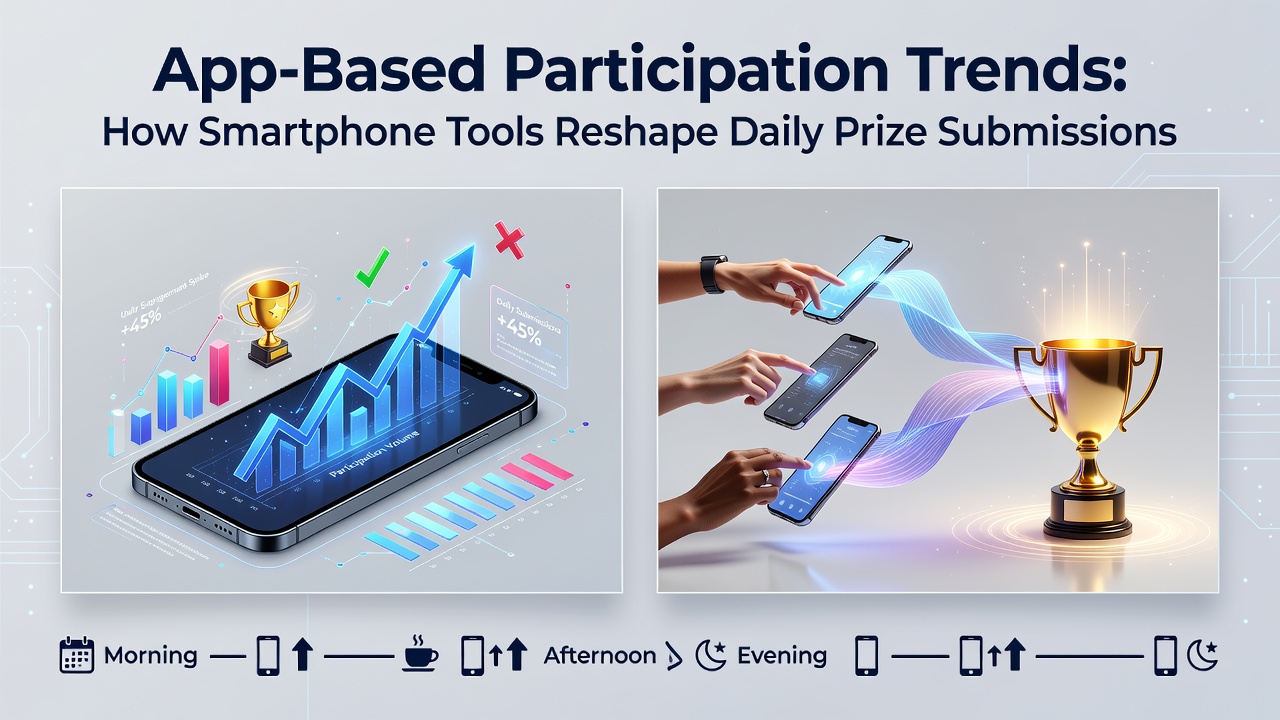
Smartphone applications have integrated directly into routines for submitting entries to recurring prize opportunities, with data from multiple regions indicating steady growth in mobile-first participation since the mid-2020s. Research from the Pew Research Center shows that mobile devices accounted for over 70 percent of online contest entries in the United States by early 2026, while similar patterns emerged in reports compiled by Statistics Canada and the Australian Bureau of Statistics. These tools allow users to complete forms, upload required details, and receive reminders through single interfaces rather than separate websites or mail-in processes.
Entry Volume Patterns Observed in August 2026
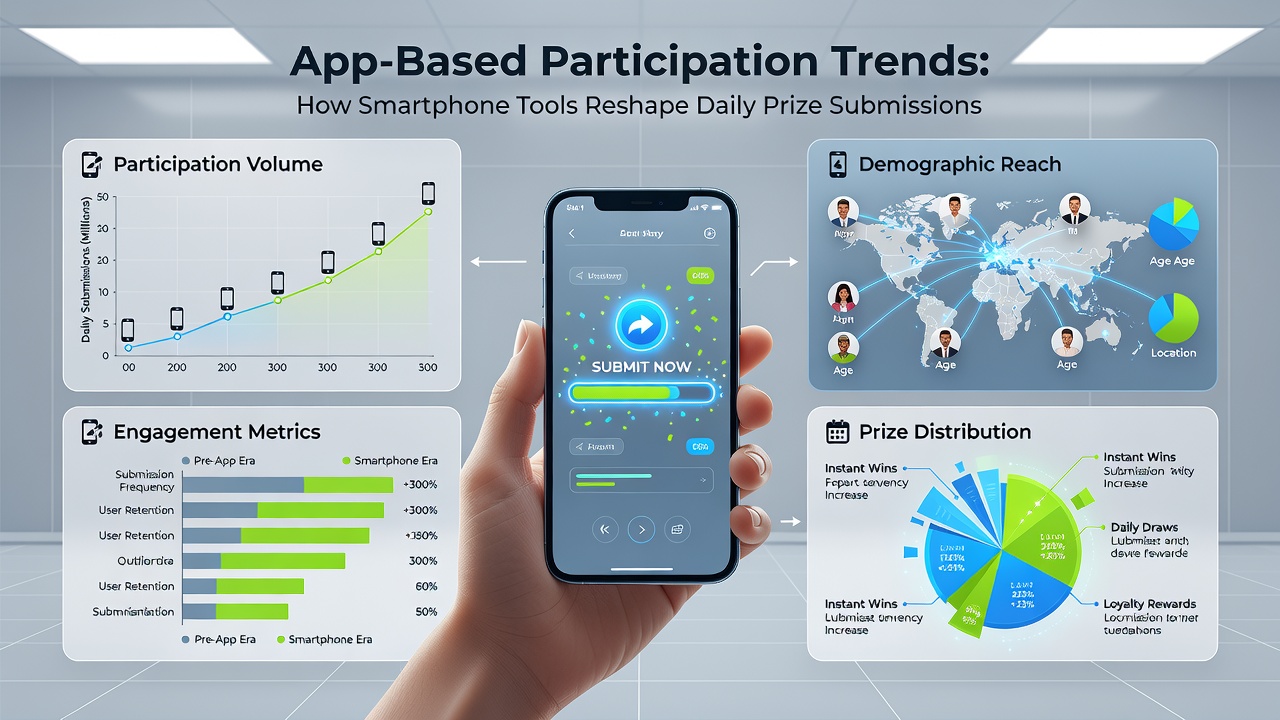
Figures compiled during August 2026 revealed notable increases in daily submissions via dedicated apps compared with browser-based methods from prior years, and analysts at industry research groups attributed part of this rise to features such as push notifications and stored user profiles that reduce repeated data entry. Observers note that participants using these platforms often complete multiple submissions within shorter timeframes because the applications consolidate various contests into unified dashboards. One study released by an academic team at a Canadian university tracked user sessions across several months and found average daily interactions lasting under three minutes per app session, yet cumulative entries per user rose when compared with desktop-only approaches.
European data sources, including summaries from the European Commission's digital economy reports, pointed to parallel developments across member states where regulatory frameworks for consumer promotions encouraged clearer disclosure of entry rules within apps. This clarity appeared to support higher completion rates for required steps such as verification clicks or social media shares. Those monitoring participation metrics across platforms recorded that apps with integrated scanning tools for product codes or receipts saw elevated activity during promotional periods tied to seasonal events.
Tool Features Driving Submission Changes
Applications commonly incorporate geolocation checks, instant receipt uploads, and automated eligibility quizzes that streamline what once required manual cross-referencing of rules. Data indicates these elements correlate with broader demographic reach, as younger cohorts and users in rural areas report comparable entry frequencies when mobile access removes previous barriers tied to computer availability. Industry organizations tracking digital engagement have documented cases where apps offering offline form-saving capabilities maintained consistent submission numbers even during periods of limited connectivity.
Researchers examining logs from multiple giveaway platforms discovered that reminder systems scheduled around user-selected times led to repeat daily activity without increasing overall screen time substantially. Participants often combined entry tasks with other mobile routines such as commuting or short breaks, which contributed to the observed uptick in total submissions. Security features including biometric verification and encrypted data transmission addressed concerns around personal information shared during registration, and adoption rates climbed accordingly in regions with strict privacy standards.
Regional Variations and Platform Comparisons
Comparisons between North American and European markets highlight differences in preferred app functionalities, with North American users showing stronger engagement with gamified progress trackers while European participants responded more to transparency tools that display real-time entry counts and winner selection processes. Australian reports from government statistical agencies noted higher uptake among users aged 35 to 54 when apps included accessibility options such as voice-guided navigation for form completion. These variations suggest that localized adaptations within the same core smartphone framework influence overall participation metrics across borders.
Trade associations representing digital marketing sectors have compiled case examples where brands migrated traditional mail or web entry systems to app-based formats and recorded measurable lifts in volume without corresponding increases in promotional budgets. The transition coincided with broader smartphone penetration rates that exceeded 85 percent in several surveyed countries by mid-2026. Integration with existing device calendars and contact lists further simplified coordination of entry deadlines across multiple ongoing promotions.
Conclusion
Available statistics from government agencies, academic studies, and industry analyses demonstrate that smartphone applications continue to modify how individuals approach daily prize submissions through streamlined interfaces and supplementary features. Patterns documented around August 2026 reflect sustained adoption across varied regions, supported by improvements in verification, notification, and data handling processes. Ongoing monitoring by research institutions will likely provide additional details on long-term effects as these tools evolve alongside device capabilities and regulatory updates.