Unraveling the Rhythms of Contest Entry Behaviors Across Seasons
Gisela Brooks · Aug 6, 2026
Unraveling the Rhythms of Contest Entry Behaviors Across Seasons
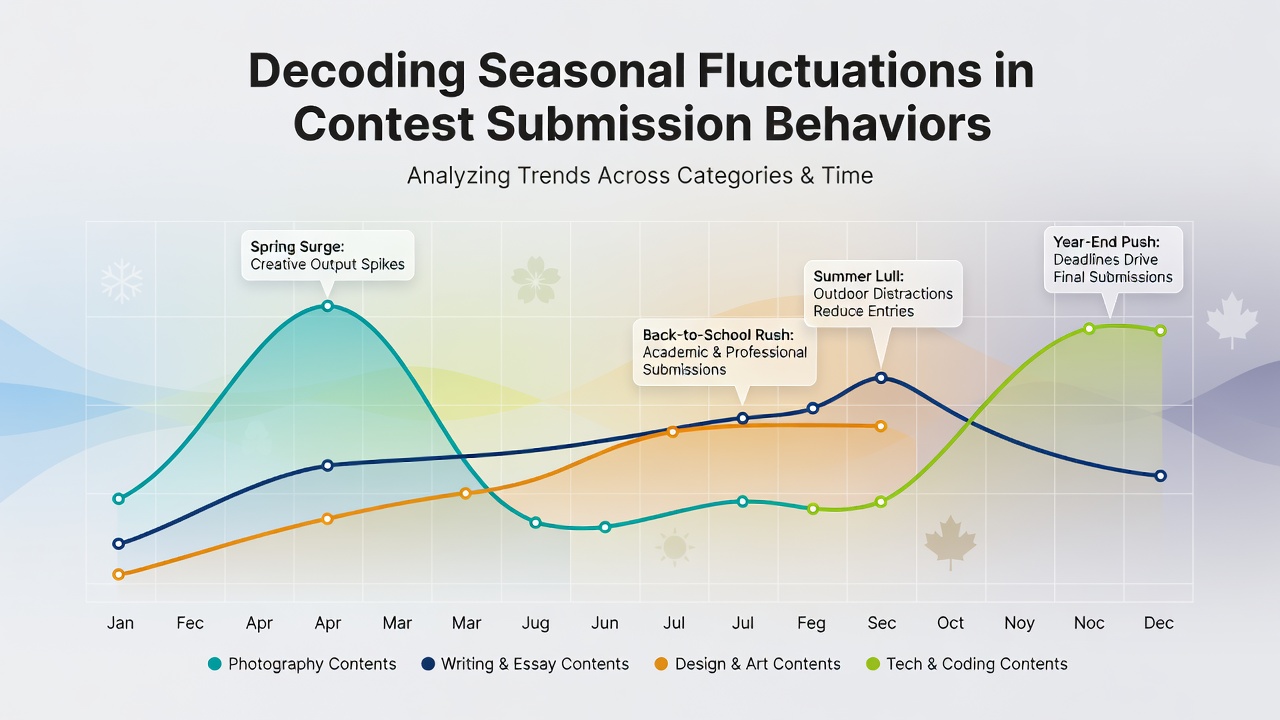
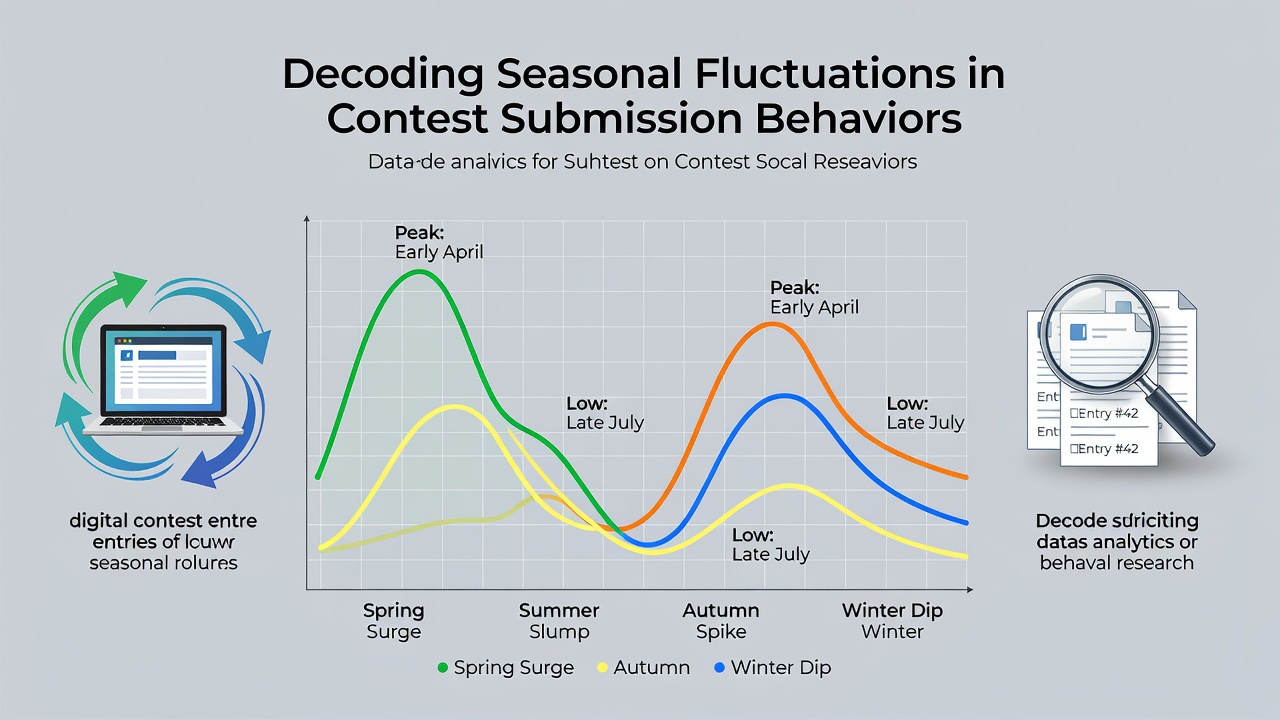
Contest submission behaviors shift noticeably throughout the year as participants adjust their routines around holidays, weather patterns, and major life events, according to aggregated platform analytics from multiple sweepstakes sites. Data from 2024 through early 2026 shows consistent spikes in entries during November and December, when holiday promotions and family gatherings encourage more frequent online activity, while summer months often see reduced volumes as outdoor schedules take priority for many users.
Key Drivers Behind Monthly Variations
Research from the University of Melbourne's consumer behavior lab indicates that colder months correlate with higher desktop-based submissions, since people spend more time indoors and combine entry sessions with evening relaxation. In contrast, mobile entries rise during spring and fall transitions when commuters seek quick diversions during travel, a pattern confirmed across North American and European platforms. Observers note that back-to-school periods in late summer create secondary surges, particularly for family-oriented giveaways involving electronics and apparel, as households prepare for new routines.
August 2026 data already hints at an earlier-than-usual uptick compared to prior years, driven by expanded digital marketing around labor day events and pre-holiday product launches. Those who track submission timestamps report that weekends consistently outperform weekdays by 15 to 25 percent, regardless of season, because participants have larger blocks of uninterrupted time to complete multi-step entry forms.
Regional Differences in Seasonal Patterns
Statistics Canada reports reveal that northern provinces experience sharper winter increases in contest participation than southern regions, where milder climates allow year-round outdoor activities that compete with screen time. Australian data from the Competition and Consumer Commission shows the opposite calendar alignment, with December and January marking the lowest entry periods due to summer vacations and beach season, while June through August see elevated activity during their cooler months.
European studies compiled by academic researchers at Erasmus University further highlight how national holidays create micro-peaks, such as elevated submissions around Easter in several countries or midsummer festivals in Scandinavia. These localized spikes often last only a few days yet contribute measurably to overall quarterly totals when aggregated across platforms.
Impact of External Events on Entry Volumes
Major sporting events, economic announcements, and viral social media trends can override typical seasonal baselines, according to industry reports tracking thousands of active giveaways. One analysis of 2025 submission logs found that unexpected weather events, like prolonged heat waves or early snowstorms, temporarily boosted entries as people sought indoor alternatives, while economic uncertainty periods prompted more conservative entry behaviors focused on high-value cash prizes rather than product giveaways.
Platform operators have observed that reminder emails and push notifications perform differently depending on the month, with higher open rates in January when participants set new year resolutions around winning opportunities. The same campaigns see diminished engagement in July and August when vacation schedules fragment user attention across multiple time zones.
Conclusion
Understanding these cyclical patterns allows contest organizers and participants alike to anticipate volume changes and adjust strategies accordingly, whether by timing promotions for high-engagement windows or spacing out entries during slower periods. Continued monitoring through 2026 and beyond will clarify whether emerging technologies or shifting work habits alter these established rhythms in meaningful ways.